The conference will provide a platform for showcasing investment initiatives and updates in foreign direct investment (FDI) policies that are geared towards advancing mining hubs in Eurasia. In addition, the conference will highlight examples of industrial development that target enhancing productivity, reduction of environmental footprint, and fostering durable community ties with extractive industries.
Venue Address: 51 Lime Street, London EC3M 7DQ
Welcome Remarks by MINEX Forum’s Chairman
Host welcome message
Presenters
09:10 - Keynote address
09:20 - Theme Pending

EURASIA CRITICAL MINERALS ORGANISATION
CENTRAL ASIA GOVERNMENT ROUNDTABLE (BY INVITATION)
Roundtable for Central Asian Governments to discuss common issues in developing critical minerals to benefit the country, specific to Central Asia.
- Engaging with investors, mining companies, and strategic partners focused on the region
- Knowledge sharing on mineral resources, diversifying investment sources, maximizing in-country benefits, middle-corridor and logistics
- Attracting mid-stream investment attraction in processing and advanced manufacturing
- Collaboration in a region of strong geopolitical importance
Discussion of the tension between balancing the demands of industry, with local politics and economic growth, including comment on the potential disconnect between strategic national goals (resource nationalism) and the reality of the market.
- How can mining policy makers create investor friendly frameworks while ensuring economic growth and industry development?
- Understanding how regulatory frameworks can support infrastructure development, manage the balance between sustainability and economic growth and have a positive effect on the mining sector.
- Partnering with international experts to construct long-term strategies and set realistic goals for value addition from local beneficiation and industrialisation from mine to market.
Presenter
09:40 - Eurasia's Role in Critical Mineral Supply Chains: Copper, Uranium, Tungsten and Battery Materials

Panel discussion on financing mining projects in Eurasia in current geological landscape where China is increasing competition for mineral resources with the Global West.
- Financing new mines is an expensive and risky business, especially when factoring in geopolitical and economic risks, infrastructure build, and compliance with ESG requirements.
- Increased investment in mining projects is required to deliver global mineral and metal needs yet traditional Western financing for new mining project development can be hard to secure in parts of Central Asia. China with its higher risk appetite, faster development speed and infrastructure capabilities has the advantage.
Panel


Principal Banker, Natural Resources
European Bank for Reconstruction and Development
As Eurasia moves from agreements to operational mines, risk management is becoming as important as access to capital. Projects across Central Asia, the Caspian and the Caucasus are growing in scale and complexity, from new greenfield developments to midstream processing and cross-border logistics along the Middle Corridor. Investors, lenders and developers increasingly expect a clear view of risk before they commit.
This session looks ahead at how insurance and risk analytics can help make Eurasian projects bankable and resilient. It will cover risks across the full mining lifecycle, from construction and project cargo to operations and closure. It will also discuss what insurers look for when assessing mining risks, and how data-driven risk insight can support investment decisions and underpin the region’s next phase of development.

Presenters
11:30 - Overview of all risks and insurance solutions to mining companies (from cradle to grave).

11:45 - Construction – Consideration for miners / investors as regards to project related insurances.

12:00 - Operational Mining Risks – what insurers are concerned about.

12:15 - Risk and Analytics – Our capabilities and how we support investors and miners.

- Recent changes in regulation have raised eyebrows but Kazakhstan is still viewed as the easiest place to do business and most investible country in Central Asia. Is this perception correct and the situation likely to sustain?
- The large operations have changed ownership in the past years signalling a move to modernisation but at the same time the influence of China has risen across the country. Local license owners critical of the complexities of international finance are increasingly turning to Chinese investors.
- What does this trend mean for the country and is a backlash coming?
- Uzbekistan is seen as the next prospect for mining investment in Central Asia. Interest in the LSE bonds, regulatory reforms underway, and effective marketing from TMK have spiked investor interest in Uzbekistan.
- The country employs a pragmatic approach that welcomes all interest, whilst maintaining control and balancing state interests.
- How easy is it to invest in Uzbekistan with such strong State-owned sector?
- Are there examples of successful investment?
Presenter
14:45 - Supporting Mining Development in Central Asia: Integrated Environmental Laboratory and Engineering Solutions

- When you think of Kyrgyzstan you think gold, and specifically the massive Kumtor mine. The country is moving beyond gold and promoting investment in twenty-one critical minerals, with key-investor ready projects.
- Is the regulatory environment sufficient to satisfy investors?
- Is the goal of beneficiation in the land-locked, mountainous country, with unreliable power credible?
- Investor interest in Tajikistan is rising. With the recent successful fund raise for the Aprelevka gold project in the prolific Tien Shan belt that runs through Tajikistan, and the successful US interest in the Anzob gold/ antimony project, is Tajikistan the place to be in Central Asian mining?
- What do we know about the regulatory environment and ease of doing business?
- The Tajik government are keen to diversify away from the high levels of Chinese and Russian investment in country. How can they do this?
Presenter
16:15 - Tajikistan’s Critical Minerals: From Potential to Investment

- Since declaring the ceasefire with its neighbours interest in Armenia is peaking. The country’s key position in the Middle Corridor has cut transport times and opened up the country.
- With known rich gold, copper and moly projects, is it time for investment in the country’s rare earth potential?
- How is international investment viewed and what are the investment conditions like?
Presenter
16:45 - Armenia – Capitalising On The Peace Dividend

- Europe’s push to diversify critical-minerals supply chains is raising the strategic importance of Central Asia, the Caspian region and the South Caucasus. This session explores how the Middle Corridor can grow from a transport route into a wider supply-chain architecture linking Central Asian minerals with European markets.
- It will focus on Azerbaijan’s role as a transit, logistics and energy hub connecting Central Asia, Türkiye and Europe, and assess how infrastructure, regional cooperation and new transport initiatives can strengthen supply-chain resilience and reduce reliance on traditional routes.
- The session will also consider the growing involvement of the EU, Türkiye, China and other external actors, and how competition over critical minerals and connectivity may reshape the geopolitical significance of the wider Caspian region.
- Azerbaijan – State Programme for Mining and Metallurgy Development (2027–2030): Diversifying beyond oil: can mining and metallurgy deliver the 2030 targets, including 5,000+ permanent jobs, and what role will they play in the non-oil economy?


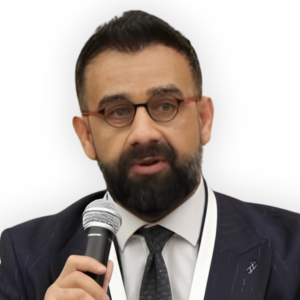
- As Eurasia’s mining sector scales up, how companies manage risk will increasingly decide which projects succeed. This session draws on case studies from around the world, showing what strong and weak risk leadership looks like in practice, and what they mean for Eurasian miners and investors.
Presenter
17:45 - Managing Risk in Mining - the Good, the Bad and the Ugly